
Learning in the Margins: Tracing the Production of Foundational Learning Inequities
December 2025
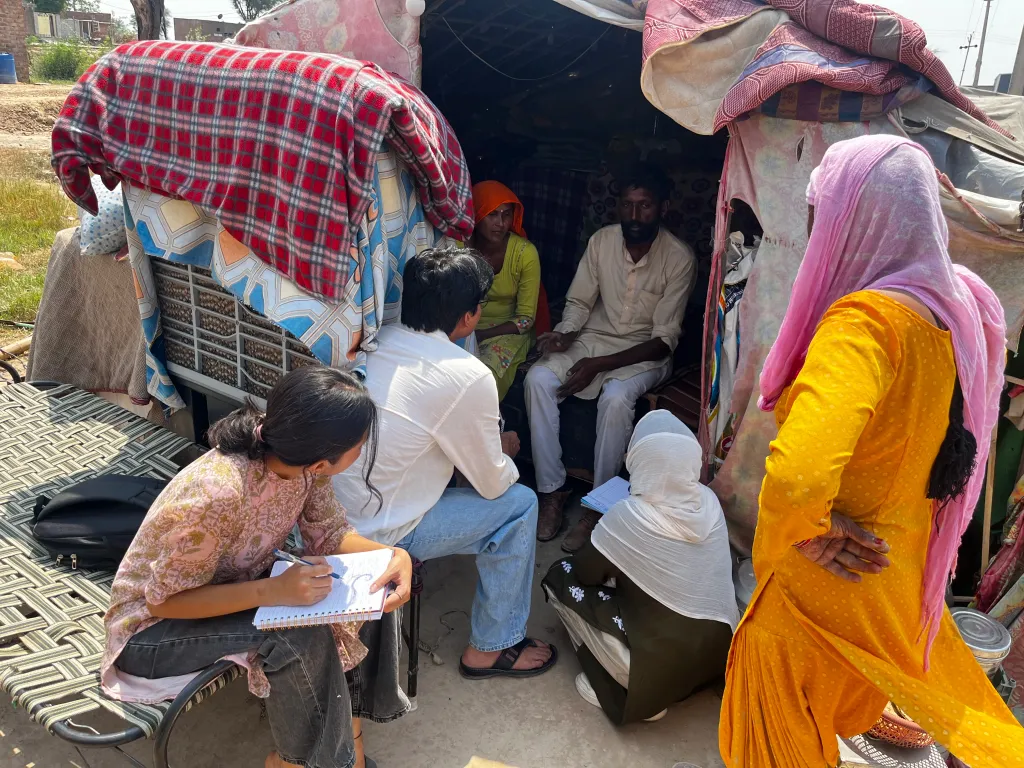
PDAG's foundational literacy and numeracy research, conducted for the Language and Learning Foundation (LLF) and titled "Learning in the Margins", examines why children in government primary schools from marginalised backgrounds continue to struggle with foundational literacy and numeracy despite years of policy attention. Rather than framing low performance as a deficit of individual children or households, the research set out to trace how structural exclusion — caste, class, language, migration status, disability, nutrition, health, sanitation — interacts with everyday schooling and family life to produce unequal learning outcomes.
PDAG conducted primary fieldwork across eight government schools in Bhadohi (Uttar Pradesh), and Sirsa (Haryana) including 200 plus interviews with grade 3 students, caregivers, teachers, head teachers, health and nutrition workers, and PRI members; classroom and school observations; and 200 plus household surveys of school going children. The study used a relational, person-centred framework that looked simultaneously at the child, the family, the community, the school, and the wider public-service environment — health, water, sanitation and transport — that shapes whether a child can attend school consistently and learn while there.
The findings show that educational marginality is not fixed or inevitable. It builds up through migration, unstable documentation, caregiving demands, and household precarity, and its effects depend heavily on what families can draw on to protect a child's schooling when disruption hits. Schools themselves play an active role too: labels like "weak learner" or "irregular student" can compress complicated histories into what look like individual failings, while everyday classroom practices around attention, seating, and participation quietly widen the gaps. At the same time, teachers' extra effort, peer support, and flexible school responses can hold a child's connection to education together after a setback.
The study argues that improving foundational learning outcomes in India will take more than instructional reform. It requires attention to educational continuity, welfare access for mobile and migrant families, and the everyday institutional practices that determine whether a child stays meaningfully connected to school. The report, the output from the study, closes with policy recommendations addressing these gaps to be taken up by the LLF team to design upcoming interventions.
Client